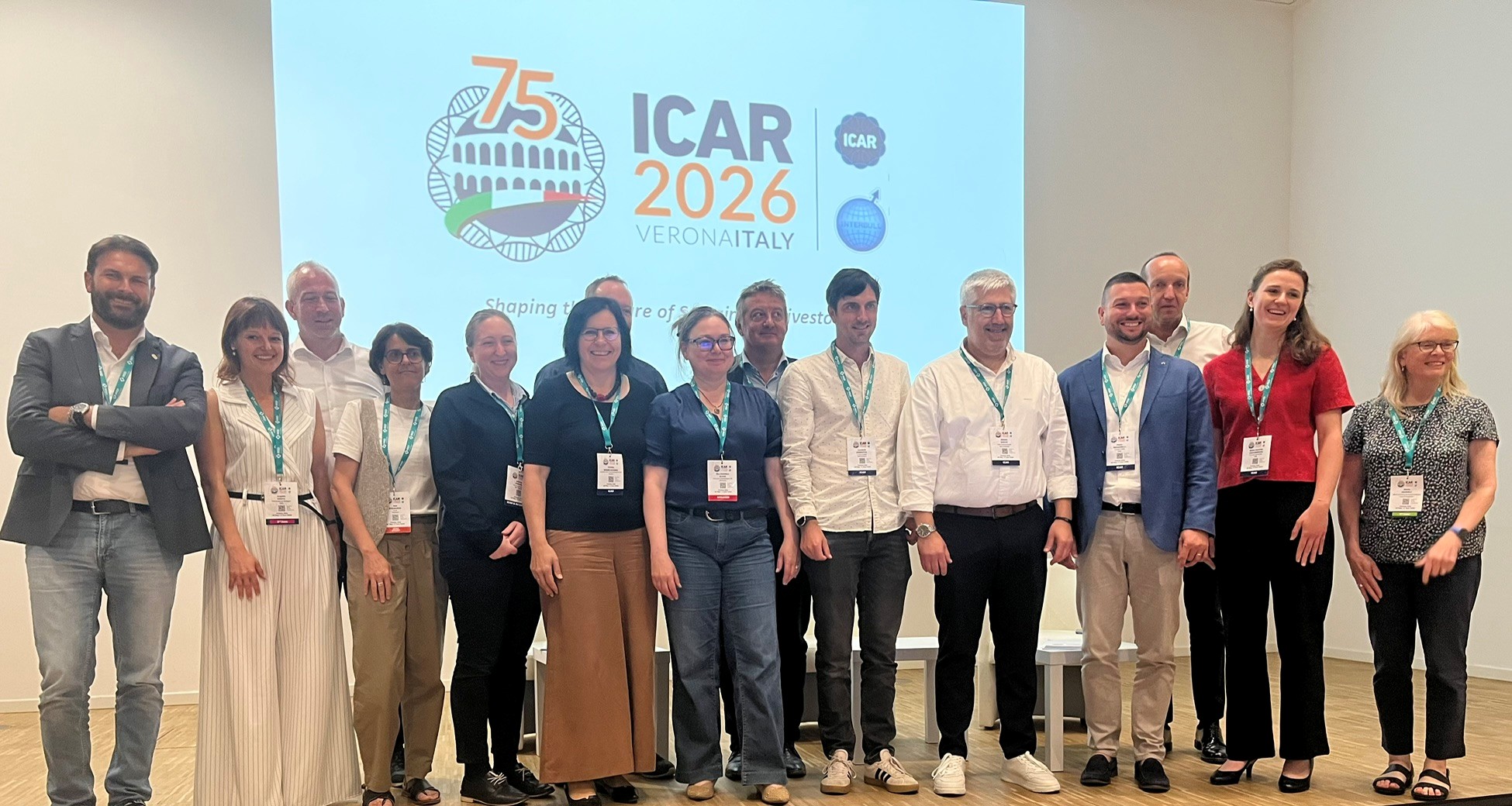


The International Dairy Federation (IDF), together with ICAR, organized a joint workshop on 2 June, in Verona, Italy, entitled ‘Use of Sensor Data to Monitor and Manage Health and Welfare of Dairy Cattle‘, held alongside the ICAR 2026 Conference.
Organized under the ICAR-IDF Joint Initiative on the Use of Sensor Data along the Dairy Value Chain, the workshop brought together stakeholders from across the dairy sector to discuss recent developments, opportunities and challenges in sensor-based monitoring. The workshop was organised by the co-chairs of the initiative, Christa Egger-Danner (ICAR Functional Traits Working Group) and Ilka Klaas (IDF Science and Programme Coordination Committee representative for Animal Health and Welfare).
The event explored how sensor technologies can support herd management and welfare assessment, the need for reference standards and validation protocols, and priorities for future collaboration. Egger-Danner and Klaas also presented progress made by the initiative, including the recent publication of an ICAR Wiki Guideline on sensor-based behaviour information for functional traits, with a focus on rumination.
From data collection to meaningful welfare assessment
Opening the workshop, Yves Van der Stede (EFSA) emphasised that collecting more data alone does not improve animal welfare. Instead, sensor data must be linked to meaningful welfare outcomes and management decisions.
He highlighted the importance of selecting relevant welfare indicators, implementing effective feedback loops, and harmonising welfare assessment approaches to help identify farms at risk and support continuous improvement across the dairy sector.
Advancing welfare monitoring through sensors
Pol Llonch Obiols (Autonomous University of Barcelona) presented how precision livestock farming technologies can strengthen welfare assessment across key domains, including health, behaviour, feeding and housing. He also highlighted the importance of standardisation to support wider adoption and interoperability across technology platforms.
Miel Hostens (Cornell University) outlined ongoing work within the ICAR-IDF Sensor Initiative to develop reference standards and validation protocols for sensor technologies. Current efforts include a technical validation protocol for rumination sensors and an upcoming review paper in the Journal of Dairy Science.
Perspectives from across the dairy value chain
Stakeholder perspectives highlighted the diverse needs and expectations across the sector. Kristian Minelli (farmer) emphasised the importance of integrated systems that combine data from multiple sources to provide a comprehensive overview of herd health and welfare. Line Ferriman (CowSmart, veterinary and advisory perspective) stressed the need for accessible and comparable data to support decision-making in practice. Melissa Stephan (LIC, breeding perspective) highlighted opportunities to use sensor data for genetic improvement, particularly in reproduction. Paolo Bulgarelli (Lactalis Italia, dairy processor perspective) underlined the importance of harmonised approaches to build confidence and transparency across the supply chain, noting that validation is essential for establishing a common language and trust. Holly Gower (RSPCA, welfare assessment perspective) pointed to the challenges of working across multiple platforms and the need for harmonisation to support interpretation, training and implementation. Across all stakeholder groups, a shared message emerged: the value of sensor data depends on trust, validation and collaboration.
Industry, research and technology perspectives
Technology and research perspectives further reinforced these findings. Ilka Klaas highlighted the potential of sensor-based welfare assessment and the importance of collaboration to translate data into practical guidelines and implementation. Jan-Mark Hoekstra (CowManager) described how sensor systems can support preventive management and welfare monitoring, enabling a shift from data to insights to action. Jasper van der Noord (Uniform-Agri) demonstrated how farm-level data integration can improve decision-making across systems. Marie Haskell (SRUC) provided a scientific perspective, emphasising that validated sensor data is essential to ensure confidence and robust welfare assessment outcomes.
Key priorities for future progress
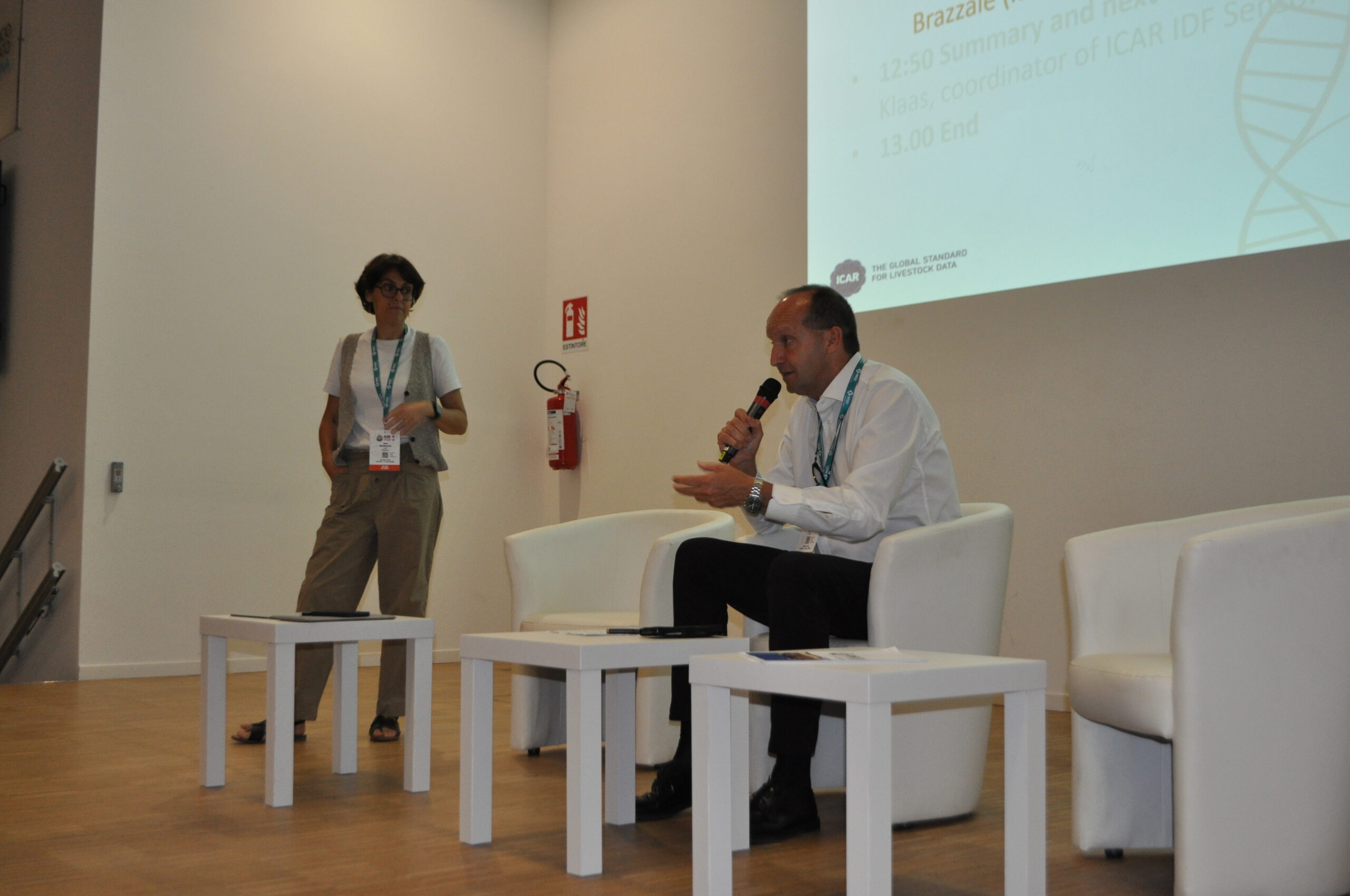
An interactive panel discussion moderated by Ana Granados Chapatte (General Manager of ICAR) and Piercristiano Brazzale (IDF Science and Programme Coordination Committee representative for Environment) explored how the sector can accelerate the effective use of sensor technologies.
Three priorities emerged from the discussions:
- Validation: ensuring sensor data is robust, reliable and relevant under real-world conditions.
- Harmonisation: aligning standards and systems to support interoperability and wider adoption.
- Transparency: building trust across the dairy value chain through clear methodologies and governance.
Participants also highlighted the importance of engaging technology providers in standardisation activities and identifying sustainable funding mechanisms for validation efforts.
Strengthening collaboration for better animal health and welfare
The workshop demonstrated the significant potential of sensor technologies to support continuous and objective monitoring of dairy cattle health and welfare. At the same time, participants agreed that technological innovation must be accompanied by robust validation, harmonised standards and effective collaboration among all stakeholders.
Through initiatives such as the ICAR-IDF Sensor Initiative, IDF continues to support science-based approaches that help transform data into actionable insights, contributing to improved animal health and welfare outcomes and strengthening trust across the dairy value chain.
Presentations from the workshop are available on the ICAR conference website.